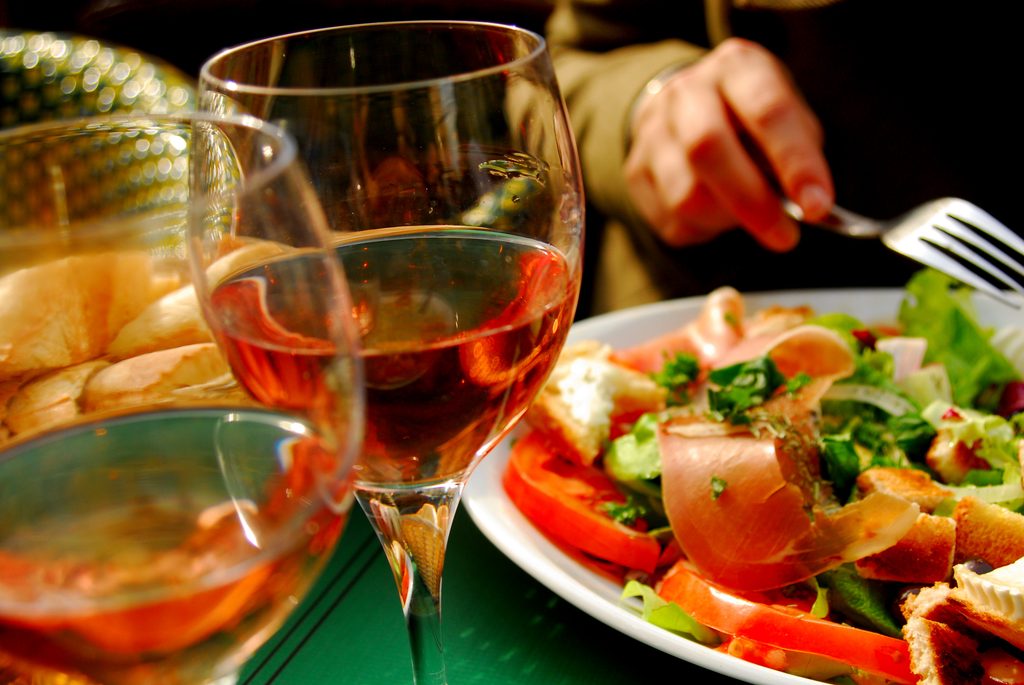
Ask anyone what they drink on the Riviera and the answer comes without hesitation: rosé. Pale, cold, bottled by the hundreds of millions across Provence every summer, it’s the wine of the terrace, the beach club, the long lunch that turns into evening — so ubiquitous that it’s easy to forget the region grows serious reds at all. But climb into the hills above Nice, or drive west past Toulon, and the story changes.
Rue de la Préfecture — one of the old town’s main streets, lined with good bars and restaurants, but also a handful of shops worth stopping for — is where you’ll find Caprioglio, a family-run cave in business since the 1930s, its 400 square metres given over almost entirely to wine from the hills just above the city. Some of it is still sold by the litre, ladled out the old way, and the man behind the counter, Jean Caprioglio, is the founder’s son. Ask what to try and he won’t just pour you another rosé. Somewhere in that room is a shelf of Bellet — an appellation so small that most French wine drinkers have never tasted it, made from grapes that barely exist anywhere else on earth — and it’s the reds he’ll reach for first.
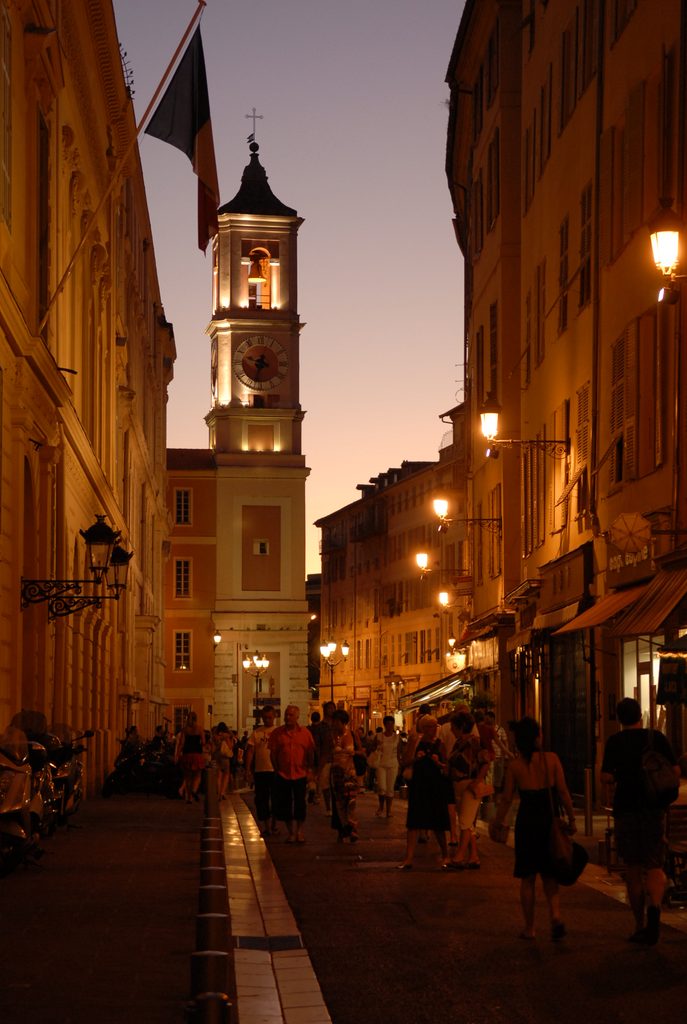
Drive up out of Nice into those hills and you understand why the wine is so hard to find. Bellet sits on terraces cut into schist and limestone above the airport, at 200 to 400 metres — close enough to see the sea, high enough to escape it. This is le terroir at its most literal: the slope, the wind, the poor stony soil, all arguing with each other to produce something specific to this one vignoble and nowhere else. The white cépage here is le rolle, the local name for vermentino, and on this hillside it comes out saline and herbal, almost sharpened by the sea air below it. The reds and rosés lean on two grapes you won’t find on a label from anywhere else in France: le braquet, pale and floral, and la folle noire, which does the heavier lifting — dark fruit, real structure, a little wild, a robe deep enough to hint at what’s coming before you’ve even smelled it. Bellet has never scaled up because it can’t; the terraces are too steep to mechanize, and every vine is still worked by hand. That’s also why it almost never leaves Nice. To drink Bellet is, mostly, to be in Nice.
Keep going west past Toulon and the whole conversation changes. Bandol is Provence’s serious red — its own appellation, built entirely around a difficult, stubborn grape called mourvèdre, which by law must make up at least half of anything called Bandol. Mourvèdre wants heat, wants to suffer a little, wants poor soil and low yields, and for most of the twentieth century almost nobody outside a handful of growers believed it was worth the trouble. Those growers worked the restanques, the dry-stone terraces climbing the hills behind the bay, and slowly proved that mourvèdre could produce something dense and charpenté — properly framed, structured, built to last — that closes down hard in youth and only really opens after eight or ten years in a cave. Balzac, who understood appetite better than most novelists ever have, put it best:
“Une bonne bouteille commence par vous être amie et finit par vous devenir tyran.”
“A good bottle begins as your friend and ends up your tyrant.”
A young Bandol can taste almost stern, all tannin and black fruit with the bouchon barely out before it’s already demanding patience. The same bottle a decade later turns into something else entirely — softer, more truffle and garrigue than fruit, the wait fully repaid. Bandol rosé, mostly cinsault and grenache with mourvèdre underneath, is one of the rare pink wines built the same way — it can actually age, which is part of why serious drinkers take it seriously.
None of this matters much, though, without the last and simplest step: drinking it. Order une dégustation at a Bellet producer and you’ll usually be poured three or four glasses with no pressure to buy anything, just a slow conversation about what’s in front of you — this vintage against that one, this slope against the next, always vif, always alive on the nez before it ever reaches your tongue. Nobody expects technical language. The compliment you’ll hear most often at a table in Nice isn’t complicated at all: ça se boit bien — it drinks well — said about a wine that asks nothing of you and gives everything back. And every so often, about a grower who’s coaxed something remarkable out of an impossible hillside or a stubborn grape, you’ll hear the older, warmer phrase: il sait tirer un bon vin de rien — he knows how to draw a good wine out of nothing. Someone will raise a glass, trinquer, and for a moment the whole slow business of terraces and patience collapses into something simple: a table, friends, an open bottle. Just don’t let Balzac’s tyrant win too many rounds — nobody wants la gueule de bois the next morning, not with more hillsides still to visit.
Victor Hugo, in a lighter mood than usual, gave the whole enterprise its shortest possible defence:
“Dieu n’a fait que l’eau, mais l’homme a fait le vin.”
“God made only water, but man made wine.”
Standing on a terrace above Nice with a glass of rolle catching the last of the light, or ten years into a bottle of Bandol finally ready to drink, it’s hard to argue with him.
Quelques mots
le terroir /tɛ.ʁwaʁ/ (n. m.) — not just soil, but the whole conversation between soil, climate and slope that a wine is supposed to taste of.
la dégustation /de.gys.ta.sjɔ̃/ (n. f.) — a tasting. Ask for une dégustation and you’ll usually get poured three or four wines with no obligation to buy.
le vignoble /viɲ.ɔbl/ (n. m.) — the vineyard, in the broad sense — a whole estate or wine-growing region, rather than a single row of vines (that’s la vigne).
la robe /ʁɔb/ (n. f.) — literally “the dress” — a wine’s colour and appearance in the glass. Une robe rubis — a ruby colour.
le bouchon /bu.ʃɔ̃/ (n. m.) — the cork. Sentir le bouchon — for a wine to be corked, faulty.
la cave /kav/ (n. f.) — the cellar. Where a wine waits its turn, sometimes for years.
l’appellation /a.pe.la.sjɔ̃/ (n. f.) — the designation, the legally defined wine region — as in appellation d’origine contrôlée (AOC).
le cru /kʁy/ (n. m.) — literally “grown” — a specific vineyard or classified growth known for its quality. Un grand cru. Also the past participle of croire, to believe: j’ai cru que… — I thought that… The same word, oddly, sits behind both what’s grown in the ground and what’s believed in the mind.
vif / vive /vif, viv/ (adj.) — lively, crisp — usually describing acidity, often praise for a white.
le nez /ne/ (n. m.) — literally “the nose” — a wine’s aroma, what you smell before you taste. Avoir le nez fin — to have a fine nose, a good sense for things, whether in a glass or in life.
boire un coup /bwaʁ œ̃ ku/ — to have a drink, casually. On va boire un coup? — shall we grab a drink?
trinquer /tʁɛ̃.ke/ (v.) — to clink glasses, to toast. On trinque? — shall we toast?
avoir la gueule de bois /a.vwaʁ la gœl də bwa/ — literally “to have a wooden face/mouth” — to have a hangover.