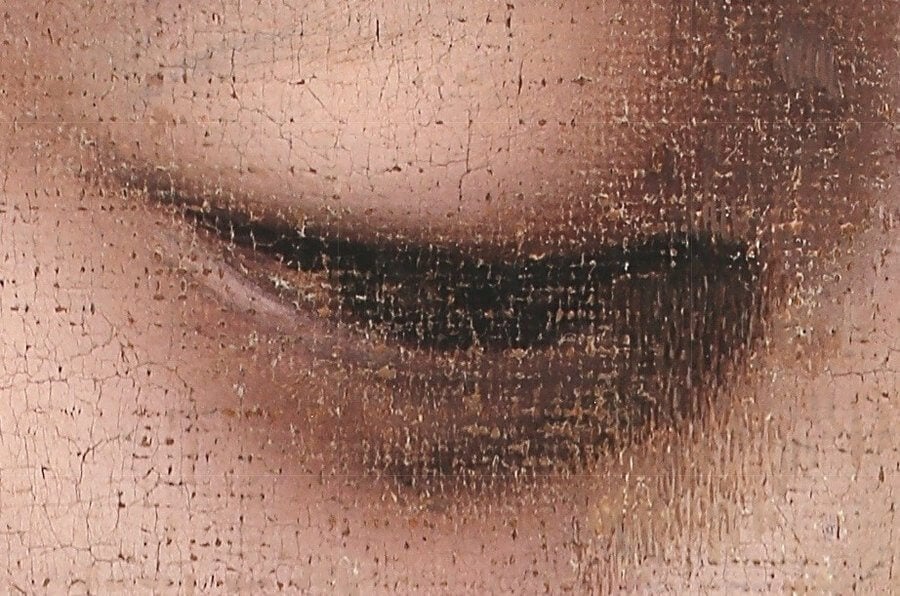
There is a door in Milano that most tourists walk past without a second glance. It sits on the side of a red-brick church, unremarkable, easy to miss between a tram stop and a row of shuttered shopfronts. You need a ticket, booked weeks in advance, and a time slot. You wait in a small chamber while the air is filtered and dried around you, because the thing on the other side of the next door is older than the country it stands in, and it is dying slowly no matter what anyone does.
Then the door opens, and you’re standing in front of L’ultima cena.
It’s bigger than you expect, and it’s not really a painting in the way you think of paintings. Leonardo da Vinci painted it directly onto the dry plaster wall of the refectory of Santa Maria delle Grazie, using a technique that let him work slowly, layer by layer, instead of racing against wet plaster the way frescoes usually demand. It’s part of why the piece has spent five centuries flaking and fading and being restored, argued over, bombed near during the war, and still — somehow — surviving. You get fifteen minutes inside. People don’t talk much. There’s something about the room itself, the scale of it, the silence, that makes conversation feel wrong.
What Leonardo painted is a dinner. And not any dinner, l’ultima. The last one. Thirteen men at a long table, and one sentence just spoken that has thrown all of them into motion — leaning, recoiling, whispering, pointing. It’s the most famous meal in Western art, and the word sitting quietly inside the title is one of the loveliest in the Italian language: cena.
Cena means dinner, but it doesn’t carry the same shrug that “dinner” carries in English, where the word can mean a plate eaten alone in front of a screen at 9 p.m. In Italian, cena is closer to an event. It’s more of the meal you build the evening around, and less the one you fit into it. Facciamo cena? — shall we have dinner? — is practically an invitation to slow down.
Italian keeps its meals carefully labeled, and each word carries its own small culture. Colazione is breakfast, usually very brief — a cappuccino and a cornetto al bar. Pranzo is lunch, and in much of Italy it’s still treated as the anchor of the day, long enough that some towns quietly empty out for a couple of hours in the early afternoon. And then cena, in the evening, when the day is done and there’s nowhere else you’re supposed to be.
Boccaccio, writing in the century after Leonardo was born, gave one of his characters a line that has been passed around Italian dinner tables ever since: chi la sera non cena, tutta notte si dimena — he who does not dine in the evening, tosses and turns all night. The thirteen men at that long table never quite got there. The sentence had just been spoken, the moment frozen, the cena suspended mid-beginning. Five hundred years later, they’re still waiting to eat.
Qualche parola, a few words
cena /ˈtʃeːna/ — dinner, f. Not just a meal, but an event — the one you build your evening around.
l’ultima /ˈlultima/ — the last, the final — but also the latest, the most recent. The feminine form of ultimo, agreeing with cena, which is a feminine noun. Italian adjectives change their ending to match the gender of the noun they describe: l’ultimo pranzo (m.) but l’ultima cena (f.). L’ultima cena is the last supper, but could also, in a sense, mean the latest in a long line of dinners.
facciamo /fatˈtʃaːmo/ — let’s, shall we — the first person plural of fare, to do or to make. One of the most useful words in Italian: facciamo cena? (shall we have dinner?), facciamo una passeggiata (shall we take a walk?), facciamo così (let’s do it this way). A single word that opens a door to almost any suggestion.
colazione /kolatˈtsjone/ — breakfast, f. In Italy usually very brief — a coffee and something sweet.
cappuccino /kappuˈtʃiːno/ — cappuccino, m. The classic Italian breakfast coffee: espresso with steamed milk. Never ordered after noon.
cornetto /korˈnetto/ — croissant, m. The Italian breakfast pastry, softer and sweeter than its French cousin, with a lighter, more brioche-like dough. In the plural: cornetti. Comes in several versions: cornetto vuoto (plain, empty), cornetto alla crema (filled with pastry cream), cornetto alla marmellata (filled with jam), cornetto al cioccolato (filled with chocolate) or cornetto integrale (wholegrain).
al bar /al ˈbar/ — at the café counter. In Italian, bar is not a pub but a café — the place you go for an espresso, a cornetto, a quick conversation. The key word is al, meaning “at the”. You don’t sit down. You stand at the counter, drink your coffee in two minutes, and leave. It is one of the great Italian rituals, entirely unremarkable to those who do it every morning and entirely unforgettable to those who discover it for the first time. Bar is masculine: il bar.
pranzo /ˈprantso/ — lunch, m. Still the anchor of the day across much of Italy.
chi la sera non cena, tutta notte si dimena /ki la ˈseːra non ˈtʃeːna ˈtutta ˈnɔtte si diˈmeːna/ — he who does not dine in the evening, tosses and turns all night. From Boccaccio’s Decameron, c. 1353.